
From Local Earth to Finished Pottery – Part 6
In the previous part, I showed how the clay is dewatered after sieving. Now we move on to mixing and testing. First, the water content of the clay is determined by drying a small sample …

In the previous part, I showed how the clay is dewatered after sieving. Now we move on to mixing and testing. First, the water content of the clay is determined by drying a small sample …
This is my large clay dewatering setup made from livestock mineral tubs (the kind that hold 200 lbs). I use it after wet sieving my wild (dug) clays, allowing the clay to settle before siphoning …
This is the silty material after it has been sieved and most of the clay has been poured off. It hasn’t been fully washed yet, so there’s still some clay mixed in. At this stage, …
This is how I sieve local clay. My McCurtain County might be showing a bit. Feel free to make fun of my accent. Sieving is necessary to remove organic material (roots, leaves, etc.) and rocks …
In part 1, I showed where this material came from. Here’s what it becomes after washing away the clay, sieving it, and drying it. What started as a bucket of muddy silt turns into a …
If you had walked by me on this day, you probably would have wondered why I was filling a bucket with mud. I originally hoped this would become a clay body. It didn’t—but it ended …
Some of you may remember me posting about a huge water trough full of clay I got when we did the foundation for our shop. I’ve used this clay for years by processing out more …
Yesterday, I completed a cone 6 firing with mixed results. The clay from the big tub, which tested at 1.5% absorption but looked shiny, slumped badly. I had been afraid of that. I conducted a …
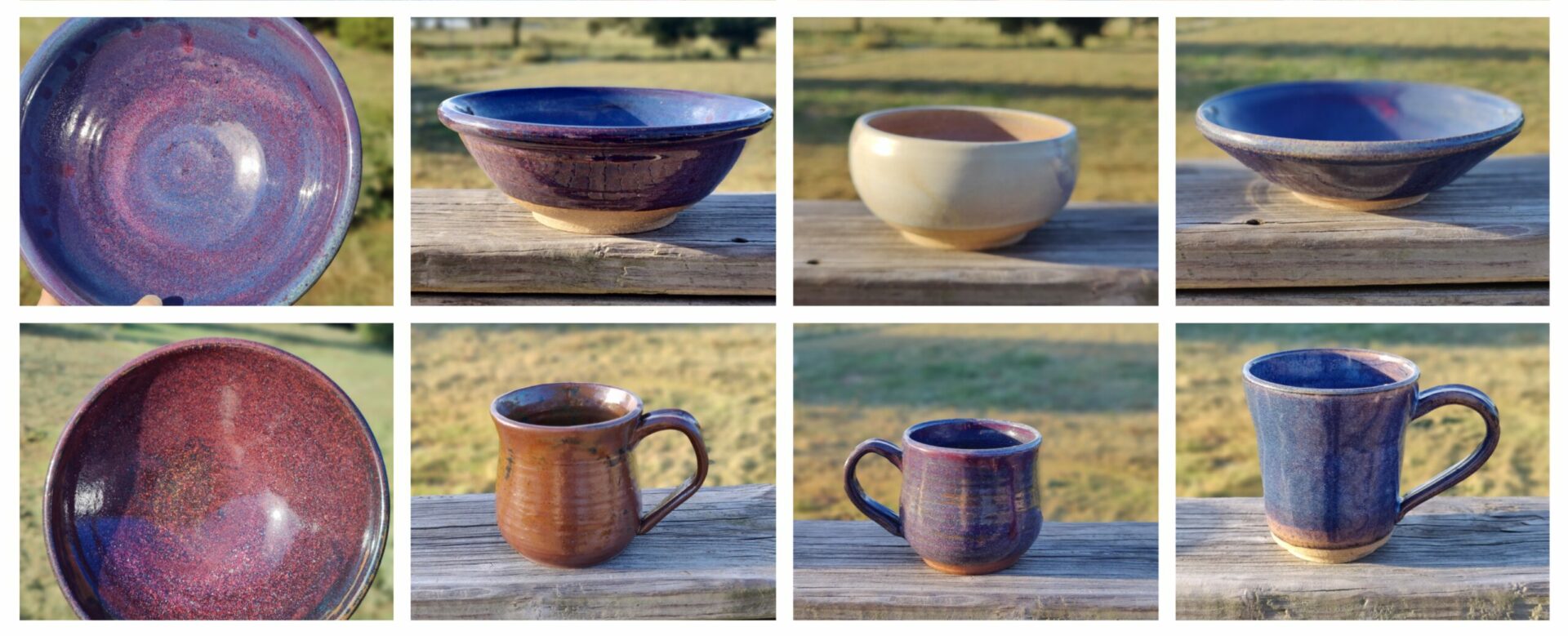
These pieces were made with a local clay body that I failed to properly absorption test before I jump to making. They’ve been in my kiln for a while. I just left them as mixed …
I know it probably seems like I haven’t been working because I haven’t been posting. I have been working—it’s just the boring behind-the-scenes stuff. Since the disaster in April, where my clay got contaminated, I’ve …


