


In the previous part, I showed how the clay is dewatered after sieving. Now we move on to mixing and testing.
First, the water content of the clay is determined by drying a small sample and weighing it before and after. Once I know how much water is in the clay, I can calculate exactly how much of each dry ingredient to add.
Some of the ingredients that might be added are kaolin, feldspar, or silica. I generally don’t have to add silica because my local clays are already high in it, but it’s a common addition in commercial clay bodies.
After the ingredients are added, the clay must be thoroughly mixed. I then pour it out to thicken to a workable consistency. I usually cover it with a cloth and keep a close eye on it during this stage so it doesn’t develop hard spots.
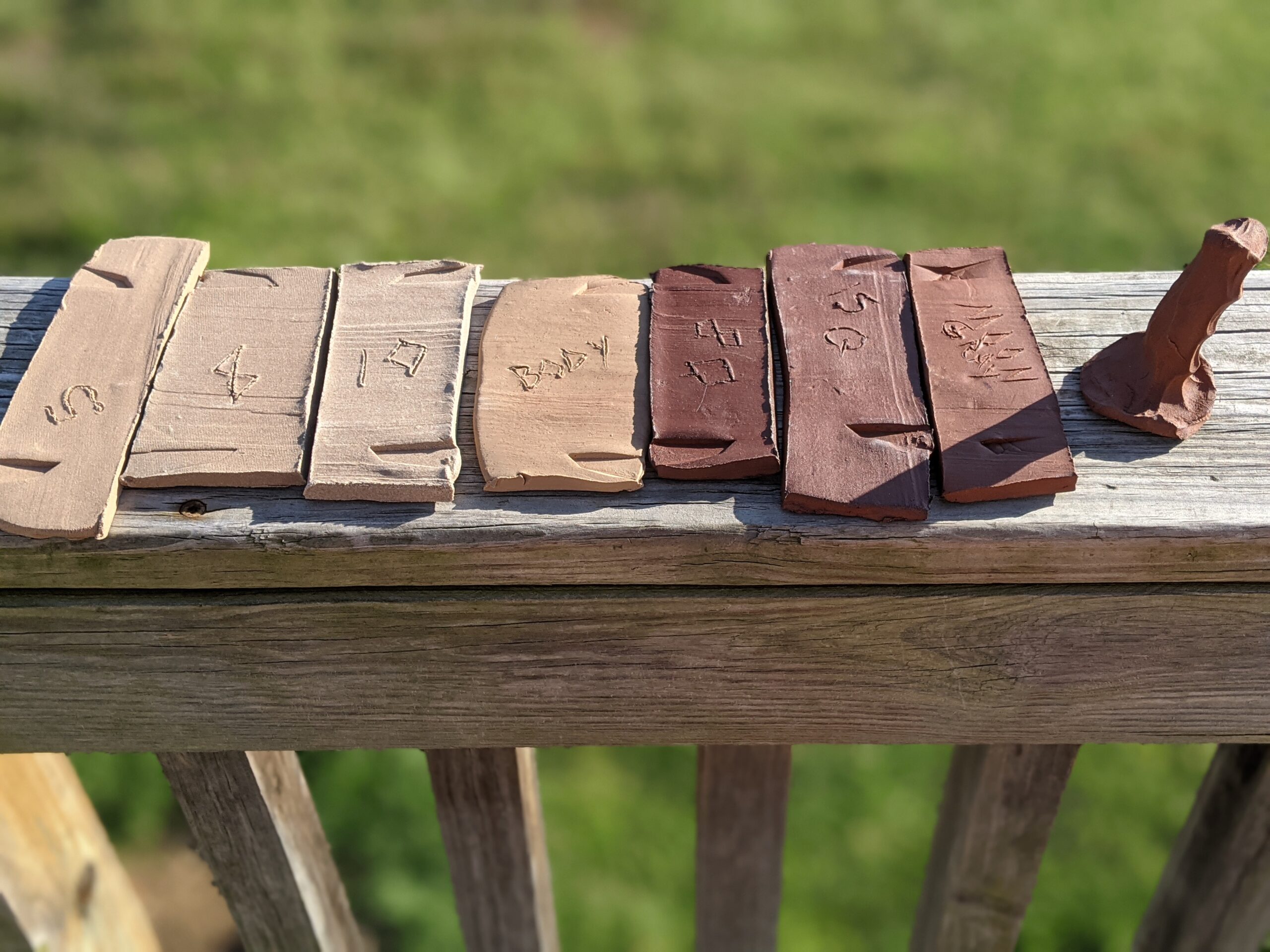
Once the clay reaches the right consistency, it’s time to make test tiles. These allow me to calculate the drying shrinkage, fired shrinkage, and fired absorption so I can evaluate how well the clay performs.
